
Avoidant Attachment Personality
There’s a type of person everyone admires at first. They don’t chase, they don’t beg, they don’t seem to need anyone.

In an era where people are constantly over-texting, over-explaining, and over-feeling, the avoidants come off as composed, independent, and in control.
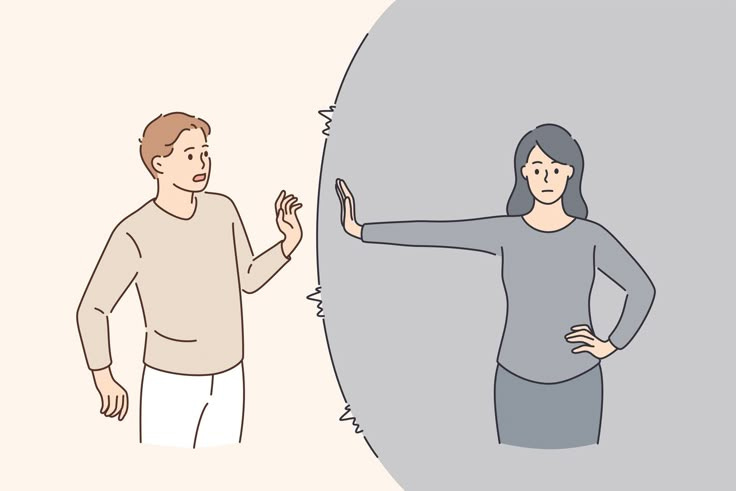
This isn’t about blaming avoidant people, it’s about recognizing the pattern for what it is. Independence is only powerful when it’s a choice, not a defense mechanism, and emotional distance is only healthy when it’s balanced, not automatic. At some point, the real question becomes whether this is truly who you are or simply how you learned to survive. Because there’s a difference between not needing people and not allowing yourself to need them.
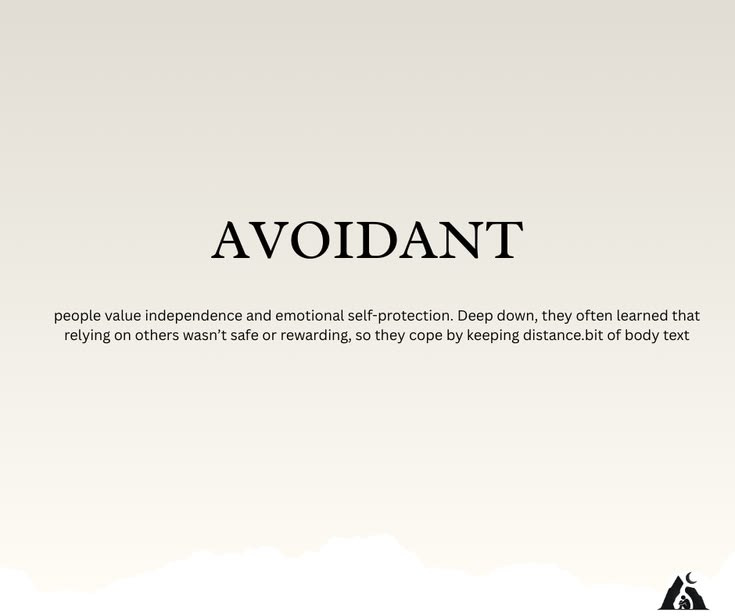
If you stay around avoidant people long enough, you start to notice something else, they don’t really let you in. Not fully, not deeply. Avoidant people don’t break hearts loudly, they do it quietly, almost politely. They’ll like you, spend time with you, laugh with you, but the moment things start to feel real not dramatic, just real something shifts. They go a little cold, a little distant, a little harder to reach. And if you ask what’s wrong, they’ll say “nothing,” and the frustrating part is, they often mean it. Because for them, closeness doesn’t feel like comfort, it feels like pressure. It feels like expectations slowly building, like someone is reaching into parts of them they’ve spent years protecting, so their instinct is to pull back. Not because they don’t care, but because caring starts to feel like losing control.
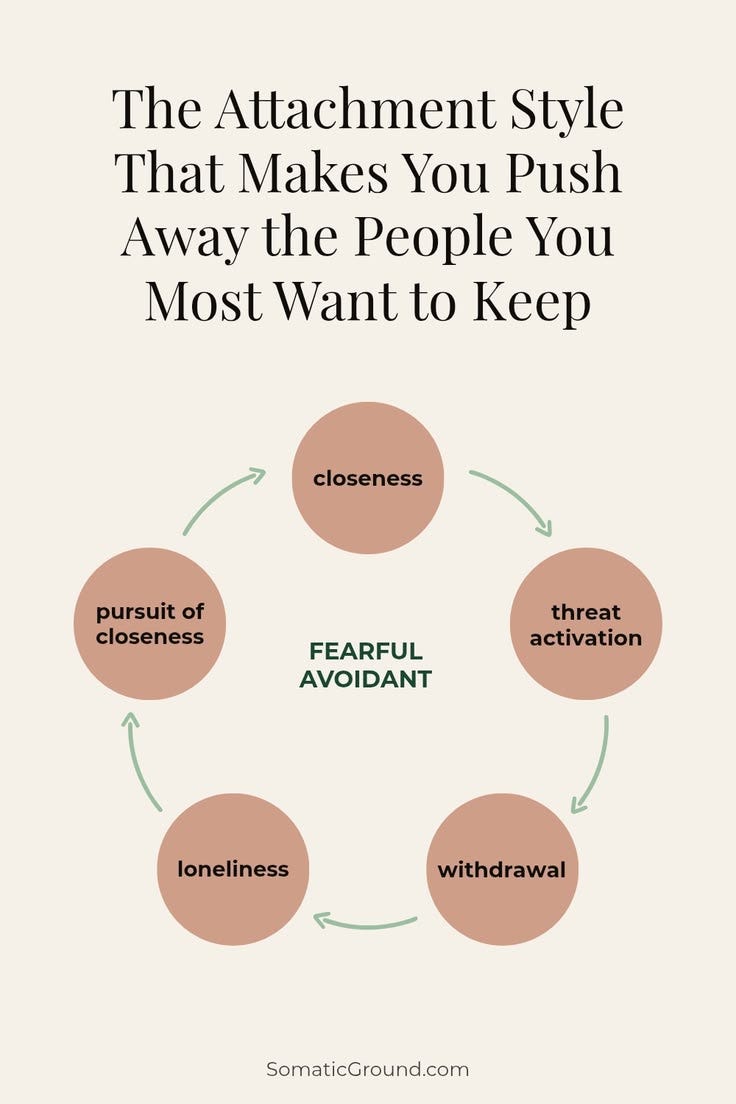
From a psychodynamics perspective, this isn’t random behavior, it’s a pattern rooted in early emotional experiences. Avoidant individuals often develop what I call “deactivating strategies,” where the mind learns to downplay attachment needs in order to maintain emotional safety. The nervous system associates closeness with overwhelm rather than comfort, so it creates distance automatically. On the attachment theory side, avoidant attachment forms when emotional needs were consistently unmet, dismissed, or responded to inconsistently, teaching the person that relying on others is unreliable or even unsafe. Over time, the brain wires itself to prioritize independence over intimacy, not because connection isn’t desired, but because it feels risky. Even cognitive patterns start to reinforce this by minimizing the importance of relationships, focusing on flaws in partners, or convincing oneself that “it’s not that deep,” all as a way to regulate emotional discomfort without directly confronting it.
Avoidant attachment is often mistaken for confidence, but it’s not confidence it’s self-protection that turned into a personality. At some point, needing people didn’t feel safe, depending on someone didn’t go well, or being vulnerable led to disappointment, so the mind adapts. Don’t need too much, don’t expect too much, don’t feel too much. And if you do feel something, handle it alone. The problem is, this strategy works at least on the surface. You don’t get hurt easily, you don’t appear desperate, you don’t lose yourself in people. But what no one really talks about is the quiet cost. You miss out on depth, not because it isn’t available, but because you keep stepping away just before it arrives. You find yourself in connections that never fully form and endings that didn’t need to happen. Over time, a pattern builds you connect, but never fully attach, you care, but rarely express it, you stay, but with one foot already halfway out the door.
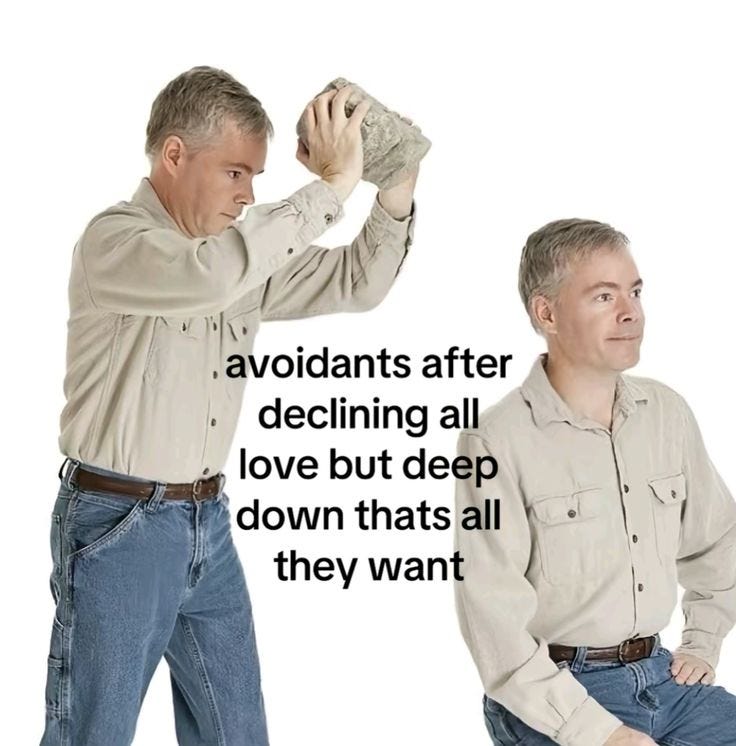
Psychologically, this also shows up as emotional suppression and hyper-independence. The brain becomes skilled at intellectualizing feelings instead of experiencing them, analyzing rather than allowing. This creates a split where you can understand emotions in theory but feel disconnected from them in practice. There’s also a subtle fear of dependency, where needing someone feels like losing autonomy, even though healthy attachment actually strengthens emotional stability. Because of this, avoidant individuals often misinterpret healthy closeness as pressure or intrusion, which leads them to withdraw from relationships that could actually be stable and fulfilling.
And then there’s the loneliness, the kind that’s hard to admit because technically, everything looks fine. You have your space, your routine, your independence, but in quieter moments, it hits you that no one really knows you like that. Not because people didn’t try, but because you didn’t let them. Avoidant people are often very good at understanding relationships intellectually, they can analyze behavior, explain dynamics, and make sense of everything in theory. But when it comes to actually feeling and expressing those emotions, it becomes complicated. Feelings don’t follow logic, they require you to slow down, open up, and risk being seen, which is exactly what avoidant patterns are designed to prevent. The hardest part is that they often meet people who are willing to love them in a healthy, consistent way, and instead of feeling safe, it feels unfamiliar, even unsettling. So they question it, doubt it, and slowly distance themselves from it until it’s gone. Later, they might say they didn’t feel a strong connection, but sometimes the truth is the connection was there they just didn’t stay long enough to experience it fully.
I think I'm avoidant individual